VAT, property and the third sector: why early planning matters more than ever
Date Posted: 28 Jul, 2026

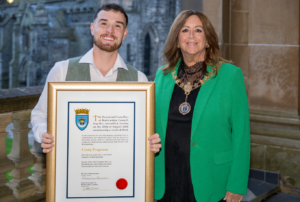
Property and construction projects can expose charities and other third sector organisations to significant and often unexpected VAT costs. Complex rules and compliance requirements, coupled with ongoing funding pressures, make early planning essential, says William Ford (pictured), Glasgow-based Associate Director for VAT at Azets.
For many third sector organisations, VAT can feel a little like checking the weather forecast before an outdoor event – not always the most exciting part of the planning, but usually worth doing properly.
Charities, not-for-profit organisations, leisure and culture trusts, development trusts, care facility operators and community organisations often operate with tight budgets, lean finance teams and competing operational pressures. Yet, despite limited resources, they are frequently exposed to some of the most complex areas of the UK VAT system, particularly when property and construction projects are involved.
Whether it is a new community hub, a leisure centre refurbishment, supported living accommodation, heritage restoration or a mixed-use development project, VAT can quickly move from ‘something for the finance team to deal with later’ to a material cost issue capable of affecting project viability altogether.
And unfortunately, VAT rarely rewards late engagement.
Complex sector, complex rules
The challenge for many third sector organisations is that their activities often sit across multiple VAT treatments at once.
An organisation may receive grant funding, make exempt supplies, undertake non-business activities, generate trading income and operate charitable activities, all under the same roof, sometimes quite literally.
That complexity becomes particularly important during construction and property projects because VAT recovery is often linked directly to how a building will ultimately be used.
In practice, this means that decisions made early in a project, sometimes innocently by operational teams, architects or funding bodies, can have significant VAT consequences later as well as possible increases in LBBT (Land and Buildings Transaction Tax) or SDLT (Stamp Duty Land Tax).
A small change in intended use can alter whether VAT incurred on construction costs is recoverable, partially recoverable or completely irrecoverable.
Opportunities often missed
The good news is that the VAT system does contain valuable reliefs and opportunities for qualifying third sector bodies.
However, many are either overlooked or considered too late in the process to maximise the benefit.
Reliefs linked to relevant residential purpose (RRP), relevant charitable purpose (RCP) and village hall provisions can potentially allow qualifying construction works to be zero-rated. For organisations undertaking eligible projects, the savings can be substantial.
Care facilities, community buildings, charitable residential accommodation and certain recreational or welfare-focused developments may all fall within areas where relief could apply, provided the conditions are met.
The difficulty is that these reliefs are heavily dependent on both technical interpretation and practical implementation.
The devil, as always with VAT, tends to be in the detail.
The cost of getting it wrong
When VAT issues are identified late in a construction project, organisations often discover there are limited opportunities left to improve the position.
By that stage:
- contracts may already be signed;
- funding agreements are finalised;
- planning and design decisions are fixed; and
- construction is under way.
At that point, VAT advice becomes more about damage limitation than strategic planning.
In some cases, projects proceed assuming VAT recovery will be available, only for organisations to later discover that a significant proportion of VAT incurred is irrecoverable.
For organisations already operating within constrained funding environments, that can create substantial unplanned costs.
Potential compliance relief on the horizon
One welcome simplification for the third sector is the recent reform of the Capital Goods Scheme (CGS). From 29 July 2026, the threshold for land, buildings and civil engineering works has increased from £250,000 to £600,000 (exclusive of VAT), reducing the number of projects that fall within the scope of the scheme.
Until now, organisations undertaking qualifying property projects have been required to monitor VAT recovery and make potential adjustments over a ten-year period. While the CGS serves an important purpose in ensuring VAT recovery reflects the long-term use of an asset, it has also imposed a considerable administrative burden, particularly on charities and other third sector organisations operating with limited finance resources.
The higher threshold should mean that many smaller and medium-sized property projects no longer require ten years of CGS monitoring, removing the need for additional VAT adjustment calculations and reducing long-term compliance obligations. Although the change does not remove the complexities of partial exemption or VAT recovery more generally, it represents a pragmatic simplification that should allow finance teams to spend less time on historic VAT adjustments and more time supporting their organisations’ core activities. For many finance teams already juggling grants, restricted funding, partial exemption and operational reporting, that administrative saving is likely to be every bit as welcome as an unexpected budget underspend.
VAT should not be an afterthought
In many construction projects, VAT is still treated as a technical consideration to be addressed towards the end of the process.
In reality, it should be part of the conversation from the outset.
Early VAT planning can often help organisations:
- reduce irrecoverable VAT costs;
- structure projects more efficiently;
- ensure contracts are drafted correctly;
- maximise available reliefs;
- avoid unexpected funding gaps; and
- minimise future compliance issues.
Even where irrecoverable VAT cannot be avoided entirely, understanding the position early allows organisations to budget accurately and avoid unwelcome surprises at completion or, in some cases, several years later when HMRC reviews the position retrospectively.
The most successful projects are usually those where VAT is considered alongside legal, funding and operational matters from day one, rather than after key decisions have already been made.
Because in construction projects VAT rarely becomes less of an issue simply by ignoring it.
Value of professional advice
Third sector organisations continue to deliver essential services and community infrastructure under increasing financial pressure. Property and construction projects are often central to those ambitions, but the VAT implications can be significant.
The sector does not necessarily need more technical jargon or lengthy legislation manuals. What it does need is greater awareness that VAT is not merely a finance question but often a strategic project issue.
Handled early, VAT can create opportunities, preserve funding and improve project outcomes.
Handled late, it can become one of the most expensive ‘small print’ issues a project encounters.
And in a sector where every pound matters, that is a conversation worth having before the scaffolding goes up.
While every project is different, early professional advice can often make a significant difference to the overall VAT position. Through careful planning and practical experience across the construction and third sectors, many organisations have been able to reduce irrecoverable VAT costs, improve project certainty and avoid costly issues arising later in the development process. Azets regularly advises charities, leisure trusts and community organisations navigating these complex rules.
For more information, visit www.azets.com/services/tax/vat.